Abstract
From 6 to 22 February, the Games identity moved across venues, cities, broadcasts and merchandise, turning brand design into public infrastructure for the spectator experience.
Background
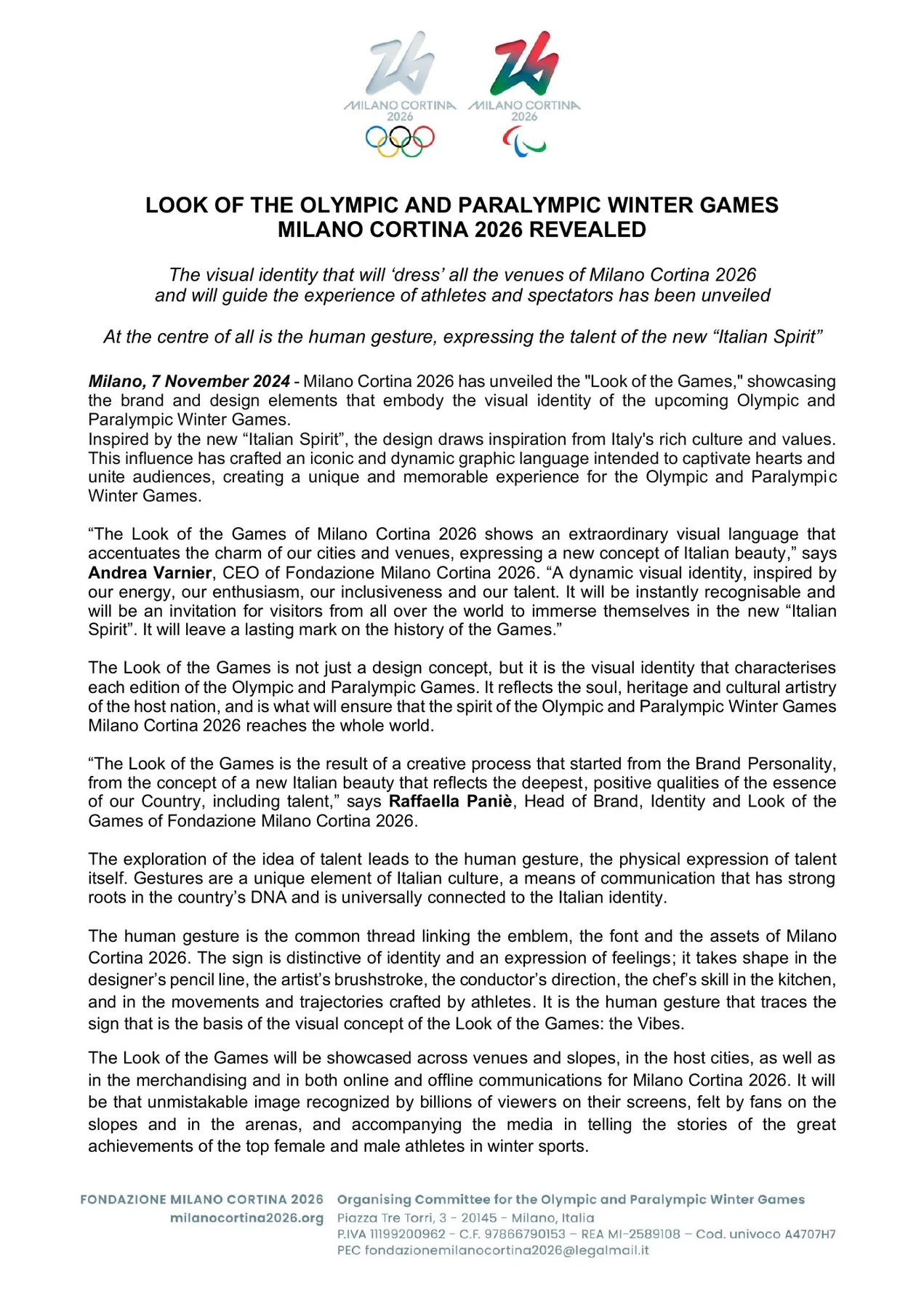
The Milano Cortina Winter Olympic Games ran from 6 to 22 February, taking the previously announced “Look of the Games” from concept into large-scale use. Its core is not a fixed pattern but the “human gesture”: athletes’ trajectories, brush marks, conducting movements and the gestures of everyday Italian conversation are translated into flowing bands of colour and strokes. Visual elements known as “Vibes”, organised around creativity, energy, imagination, passion and style, give a shared tone to events spread across cities and mountain venues.
Design Analysis
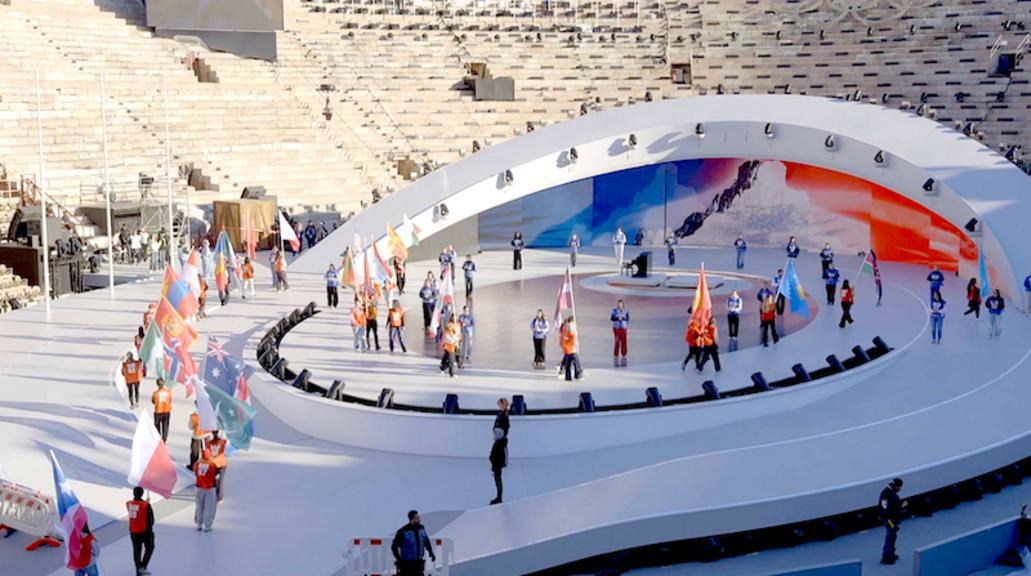
The identity appears on venue barriers, course signage, wayfinding, volunteer uniforms, tickets, souvenirs, social media and broadcast graphics. Sixteen Olympic and six Paralympic sport pictograms retain a hand-drawn sense of motion while remaining instantly recognisable in fast broadcasts, at long distance and against complex backgrounds. This application across scales shows that a major-event brand is no longer just a logo manual; it is an experience system serving space, information and emotion at the same time.
The medals and ribbons extend the same logic. A polished side and a granular side express relationships between ice and snow, athletes and communities, and the two host centres of Milan and Cortina; the medals use recycled metal. The ribbon carries the colours and gestural graphics of the Games. Visual language, material and ceremony therefore form a closed loop: lines first seen on screen become an object that athletes touch, wear and take away.
AURELIS Position
The system’s most transferable quality is its balance between strong recognition and open expression. Unity does not mean making every touchpoint identical, but giving different locations, sports and languages a common set of variable rules. For festivals, cultural tourism and large exhibitions, brand design therefore shifts from producing one striking key visual to building a grammar that spaces, media and people can all use. Only when the visual system operates in the field does it become a public service rather than promotional material.
Keywords
Milano Cortina 2026 / Look of the Games / Event Identity / Pictograms / Public Experience