Abstract
“Harmony” and “Beauty in Action” were not isolated shows, but a combined test of spatial narrative, technical coordination and cultural heritage for a multi-centre Games.
Background
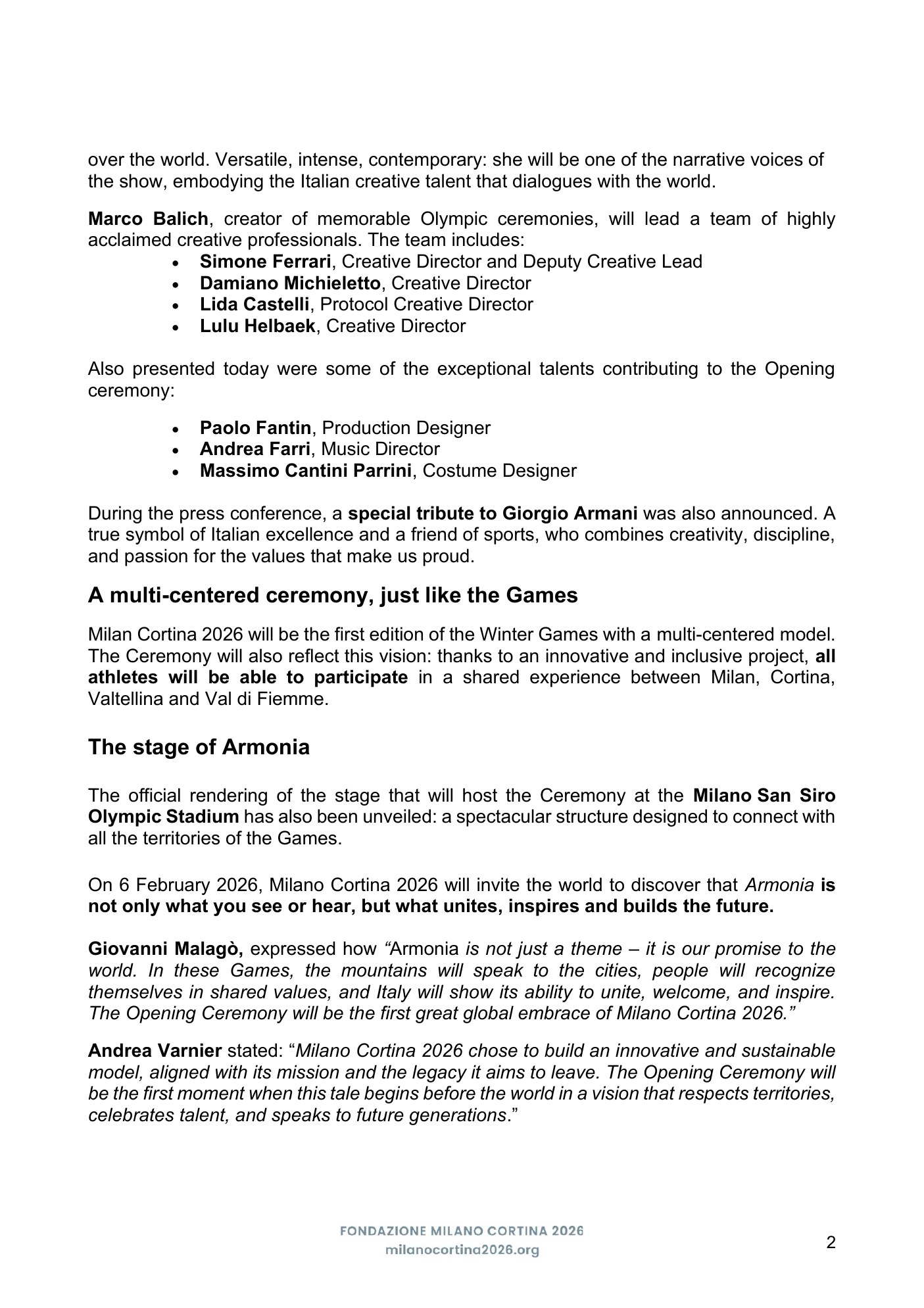
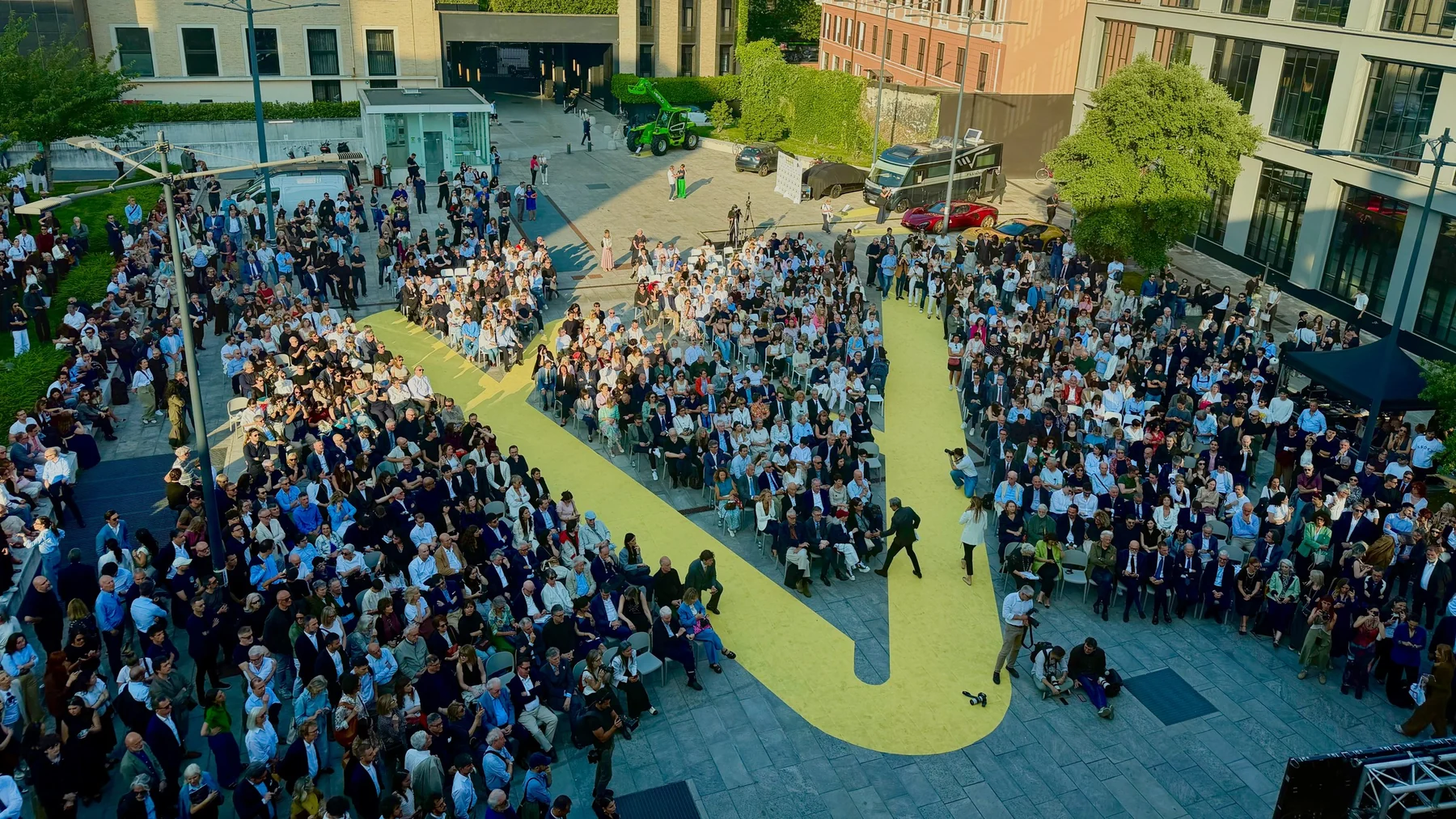
On 6 February, San Siro Stadium in Milan opened the Winter Olympics with “Armonia” (Harmony). Created by Balich Wonder Studio, the ceremony placed nature and city, tradition and future, art and innovation in dialogue, reflecting a Games distributed across Milan, Cortina, Valtellina and Val di Fiemme. The spatial design no longer assumed that everyone would gather around one stage. Multiple locations, broadcast screens and athlete participation allowed distant competition zones to share the same ceremonial moment.
Design Analysis
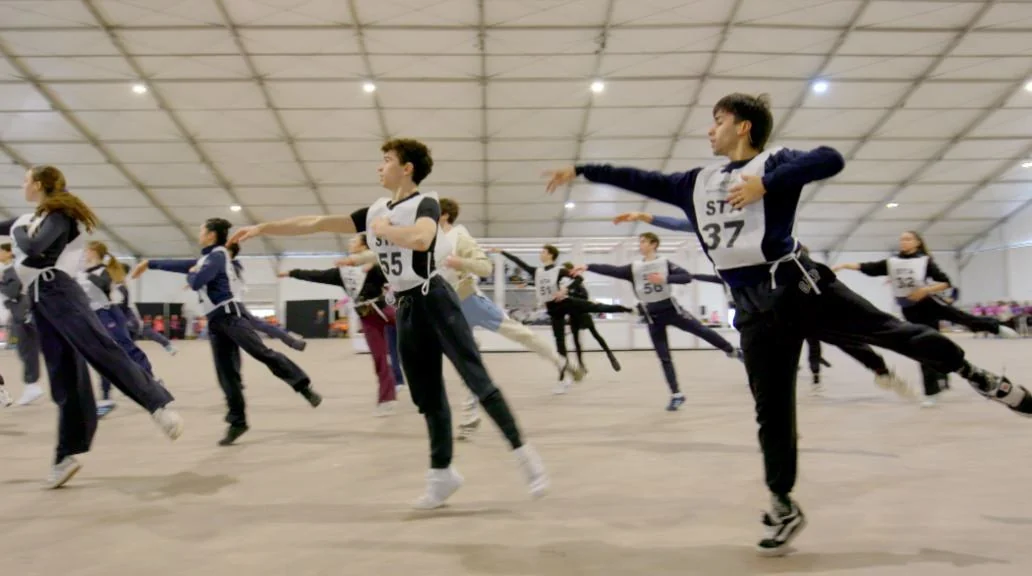
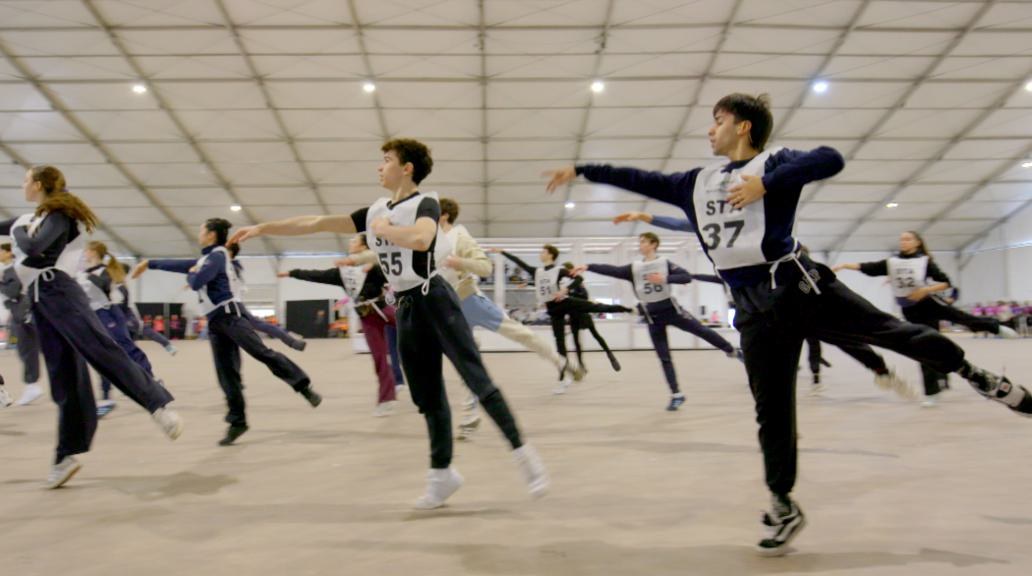
The production logic is a clear example of systems thinking in design. Stage, performance, costume, music, lighting and live camera work had to collaborate on a single timeline; no element could stand apart from the broadcast perspective. Rehearsals were not simple repetitions of a finished work, but precise adjustments to formations, movement, rhythm and safety rules. In large-event design, visual spectacle is only the surface. Information, organisation and transitions behind the scenes are what sustain the experience.
On 22 February, the closing ceremony became the first Olympic ceremony held in the World Heritage-listed Verona Arena. Titled “Beauty in Action”, it was created by FilmMaster around the idea of a drop of water linking mountains, plains, cities, lagoon, sea and sky. The centre of the stage became a changing Italian piazza in which performers, athletes and spectators were no longer clearly separated. Opera, dance, cinema, design and technology entered the Roman arena, turning the historic building from backdrop into participant.
AURELIS Position
Together the ceremonies asked how regional culture can be felt in a global broadcast rather than compressed into a collage of symbols. Their answer lay in spatial relationships: allow distributed venues to appear at once, preserve the scale of heritage architecture and make technology connect rather than conceal. For stage, exhibition and city-event designers, Milano Cortina demonstrates that good ceremony design establishes order among time, place and people, transforming the act of watching a performance into the shared experience of a region.

Keywords
Olympic Ceremonies / Spatial Narrative / Live Production / Heritage Venue / Regional Identity