
Abstract
Italy’s most historic design award places products, processes, relationships and social benefit on the same table of evaluation.
Background
The 29th Compasso d’Oro was announced at the ADI Design Museum in Milan on 22 May. The jury selected 20 Compasso d’Oro awards, three prizes for emerging designers, ten career awards and three lifetime product awards. Founded in 1954 and organised by ADI since 1958, the award has long recorded the relationship between Italian design, industry, daily life and culture. This year’s results go further, showing the design object expanding from a product into processes, services and relationships.

Design Analysis
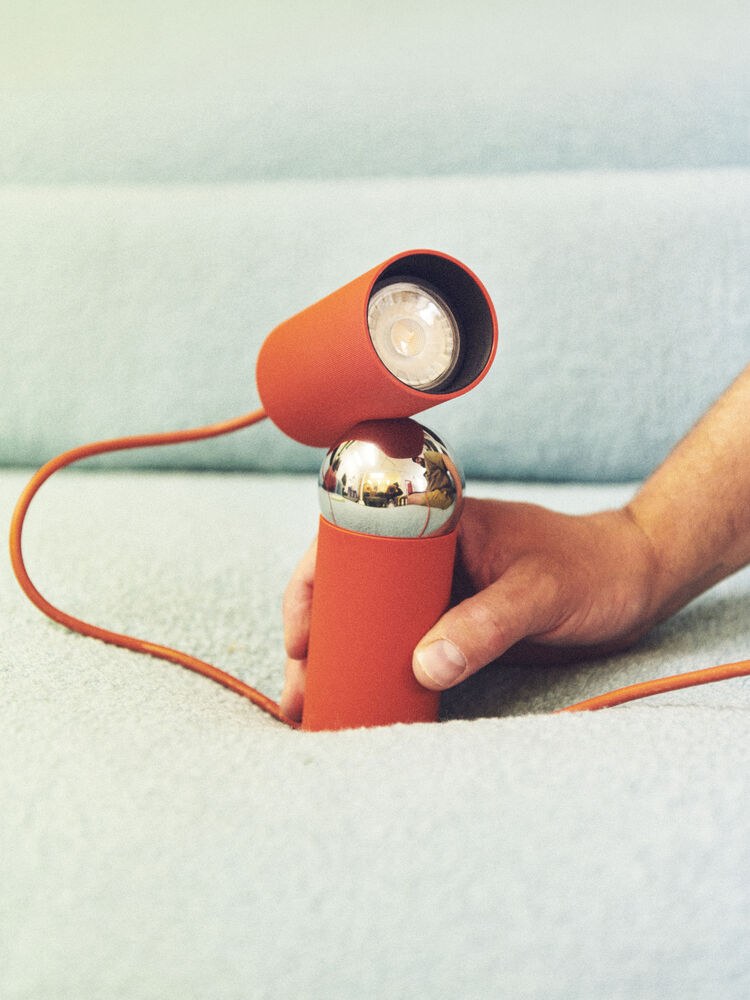
The winners span scale and sector: the Fiat Topolino micro-mobility vehicle, Philippe Malouin’s Bilboquet lamp for Flos, the Genny Zero wheelchair and the Felix R railway-maintenance robot appear together. They share no single visual style, but each reorganises technology and use around a defined problem. Bilboquet uses a rotating ball joint for direct adjustment and considers disassembly and packaging; accessibility products and maintenance robots place safety, dignity and working conditions at the centre of design.
This juxtaposition reflects the jury’s reading of reality: the boundaries among product, process and relationship are overlapping. Designers are responsible not only for final form but also for material procurement, manufacturing collaboration, digital interfaces, repair networks and public impact. An award must therefore recognise aesthetic judgement while asking whether a work succeeds inside a real system. A seemingly simple lamp that reduces parts, lasts longer and makes operation intuitive can share the category of excellent design with complex engineering equipment.
AURELIS Position
Compasso d’Oro’s enduring value lies in moving annual highlights into a historical collection where time can test them. For a fast market, this provides a necessary slower scale: will today’s novelty become tomorrow’s burden, does technology improve real use, and can a product be maintained and passed on? The 2026 results suggest that expanding design’s territory need not blur professional standards. The more interdisciplinary the work, the more clearly it must explain the problem solved, the people served and the long-term responsibilities accepted.
Keywords
Compasso d’Oro / ADI / Product Design / Design Systems / Long-Term Value