Abstract
Mexico City’s LANZA atelier draws on the English crinkle-crankle wall, using turns, thickness and openings to organise encounters through a London summer.
Background
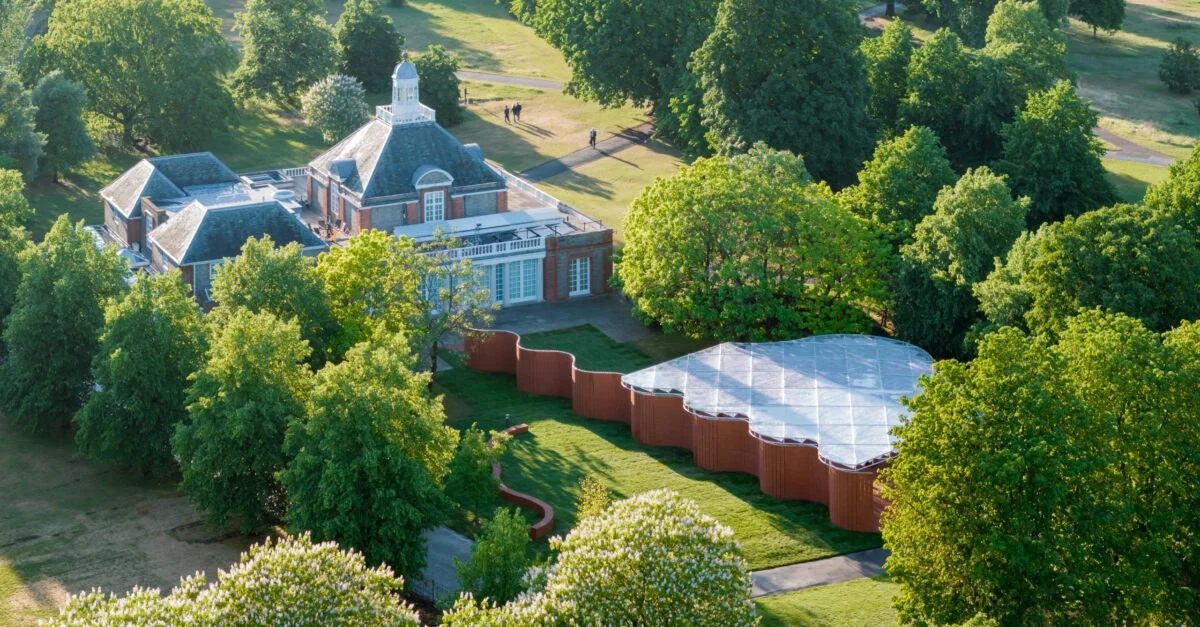
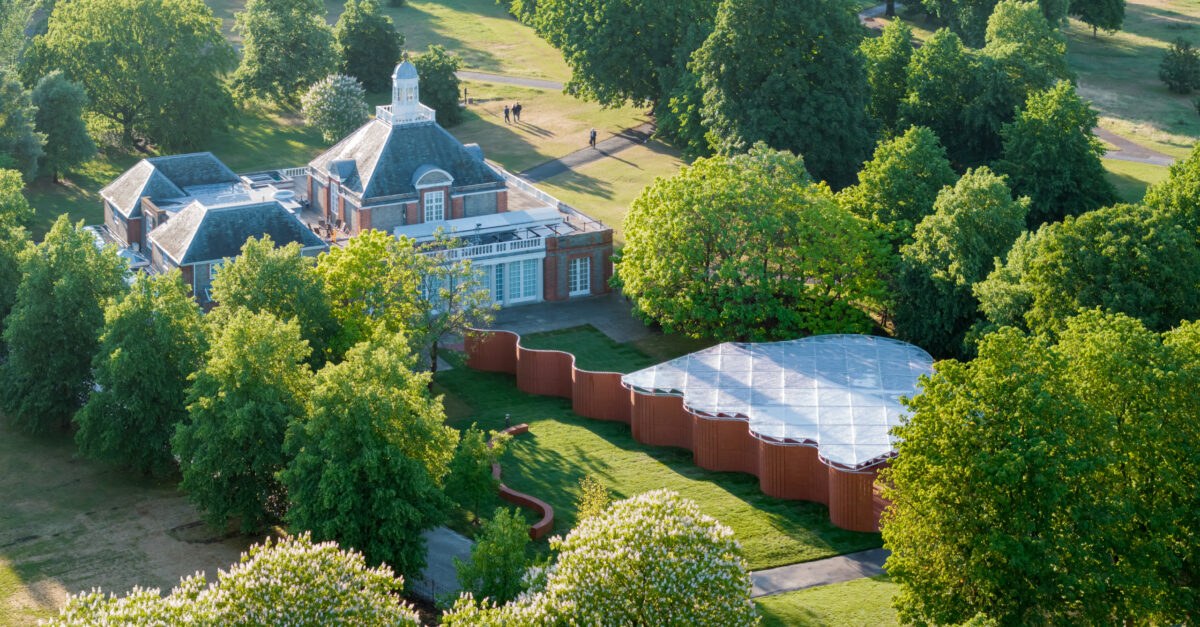
The 2026 Serpentine Pavilion, designed by Mexico City-based LANZA atelier, opened to the public on 6 June and remains until 25 October. The project’s 25th summer pavilion was designed by studio founders Isabel Abascal and Alessandro Arienzo under the title “a serpentine”. It takes the English garden’s crinkle-crankle wall as a point of departure and, at this anniversary, works with the Zaha Hadid Foundation to reflect on the experimental tradition of the temporary pavilion programme.
Design Analysis
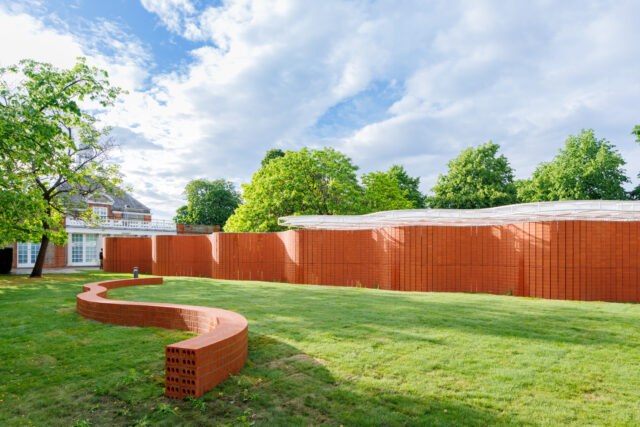
Rather than covering the site with a complete roof, the pavilion allows its wall to turn, split and create a sequence of spaces whose interiors and exteriors are difficult to separate. The bending wall gains structural stability while turning construction logic into a walking experience. Openings, gaps and partial enclosures repeatedly change the view, creating a rhythm of entering, circling, pausing and seeing the park again. Architecture becomes a path that must be understood through the body rather than an object viewed from a distance.
A wall usually implies division, but LANZA atelier treats it as a device for gathering. Its thickness provides places to lean and pause; corners create spaces for small groups while open stretches remain connected to grass and sky. The temporary pavilion must accommodate talks, performances, a café and unplanned meetings, so the design negotiates between a distinct concept and intensive everyday use. It shows that publicness does not require an undifferentiated open field; it can be produced through appropriate distance, shelter and scales of encounter.
AURELIS Position
Serpentine Pavilions are often understood as architectural manifestos, but this year’s strength lies in condensing a manifesto into one legible element. It responds to an English building tradition while carrying experiences of Latin American courtyards, walls and street life, allowing cross-cultural exchange to occur through space rather than applied pattern. For temporary pavilions, urban furniture and public installations, “a serpentine” demonstrates that limited materials and simple components can still make rich public architecture when bodily relationships are organised with precision.
Keywords
Serpentine Pavilion / LANZA atelier / Temporary Architecture / Public Space / Crinkle-Crankle Wall